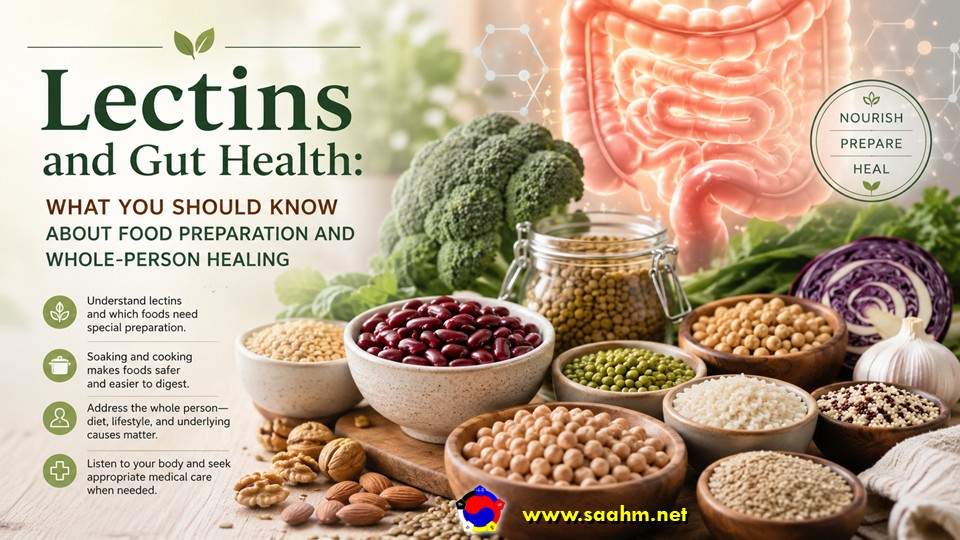
Lectins and Gut Health: What You Should Know About Food Preparation and Whole-Person Healing
Lectins are naturally occurring proteins found in many foods, including beans, grains, seeds, nuts, fruits, and vegetables. They have received considerable attention because certain lectins can cause digestive problems when foods—especially kidney beans—are eaten raw or undercooked.
However, the complete story is more balanced. The presence of lectins does not automatically make a food dangerous. Many foods containing lectins are excellent sources of fiber, protein, vitamins, minerals, and beneficial plant compounds.
Satisfaction Guaranteed: Heal Beyond Expectations.
Click to schedule a 30-minute Free Consultation
Contents:
- Lectins and Gut Health: Safe Preparation and Holistic Support
- How to Reduce Lectins Safely
- Patient Story: An Encouraging Digestive Recovery
- Patient Story: Knee Pain After a Kidney Bean Meal
- Be an Informed Owner of Your Health
- The KOSA Acupuncture Approach
- Video
- High-Lectin Vegetables & Fruits Commonly Consumed in the United States
- Foods That Should Be Soaked for a Long Time (to Reduce Lectins)
- Important Notes
- A Brief History of KOSA Acupuncture
Lectins and Gut Health: Safe Preparation and Holistic Support
The most practical questions are:
- Which lectin-containing foods require special preparation?
- How can soaking and cooking make these foods safer?
- Could a particular food be contributing to an individual symptom pattern?
- When should persistent symptoms receive medical evaluation?
At KOSA Acupuncture in Tulsa and Jenks, Oklahoma, we encourage patients to become informed owners of their health. That means paying attention to symptoms, investigating possible causes, preparing food safely, and seeking appropriate professional care—not becoming afraid of entire food groups.
What Are Lectins?
Lectins are proteins that bind to specific carbohydrates. They occur throughout nature and are found in approximately one-third of commonly consumed foods, although the type and amount vary considerably.
Plants may use lectins as part of their natural defense system. In food, the effects of lectins depend on several factors:
- The particular type of lectin
- The amount consumed
- Whether the food is raw or cooked
- The food-preparation method
- Portion size and frequency
- The individual’s digestive health and tolerance
Not all lectins act the same way. Research involving purified or highly concentrated lectins in a laboratory also does not necessarily represent what happens when someone eats a normal serving of properly prepared food.
For most people, ordinary portions of thoroughly cooked lectin-containing foods can be part of a nutritious diet.
Can Lectins Affect the Digestive System?
Some biologically active lectins can interact with cells in the digestive tract. The clearest food-safety concern involves raw or undercooked legumes, especially red kidney beans.
Raw kidney beans contain high concentrations of a lectin called phytohaemagglutinin. Eating only a few raw or inadequately cooked kidney beans may cause acute symptoms such as:
- Nausea
- Vomiting
- Abdominal pain
- Diarrhea
These symptoms can begin within a few hours of eating the beans. This is a genuine food-safety issue, but it does not mean that all beans, vegetables, or grains are harmful.
Appropriate high-temperature cooking substantially reduces the active lectins in beans.
Lectins and Intestinal Villi
The small intestine contains microscopic, finger-like structures called villi. They help the body absorb nutrients from food.
Villous damage or flattening may occur with conditions such as:
- Celiac disease
- Certain infections
- Immune-related disorders
- Medication reactions
- Inflammatory gastrointestinal conditions
- Some complications associated with medical treatment
Laboratory research suggests that certain concentrated lectins can interact with intestinal tissue. Nevertheless, available human evidence does not establish that ordinary servings of properly prepared lectin-containing foods routinely destroy intestinal villi.
Someone diagnosed with villous atrophy should receive appropriate medical evaluation to identify the underlying cause. Dietary and lifestyle changes may support recovery, but they should be based on the person’s diagnosis and coordinated with qualified healthcare professionals.
What About “Leaky Gut,” Inflammation, and Insulin Resistance?
The intestinal barrier controls what passes from the digestive tract into the body. Increased intestinal permeability can occur in some medical conditions, but its causes are complex.
Lectins have been studied for their possible effects on intestinal cells, inflammation, and metabolic signaling. However, it is not scientifically accurate to claim that normally prepared lectin-containing foods routinely cause leaky gut, insulin resistance, or metabolic disease in the general population.
Digestive and metabolic health may be influenced by:
- Genetics
- Immune activity
- Infections
- Medications
- Stress
- Sleep
- Exercise
- Alcohol consumption
- Overall dietary patterns
- Existing medical conditions
For this reason, persistent symptoms should not automatically be labeled as “lectin sensitivity.” A careful history, appropriate medical testing, and a structured food-and-symptom journal can provide better guidance.
Common Foods That Contain Lectins
Lectins occur in many foods commonly eaten in the United States, including:
- Kidney, black, and pinto beans
- Soybeans, chickpeas, and lentils
- Peanuts and certain seeds
- Wheat, barley, oats, corn, and other grains
- Tomatoes, peppers, potatoes, and eggplant
- Cucumbers, squash, zucchini, and pumpkin
- Some fruits, particularly when unripe
The amount and biological activity of lectins vary considerably. The presence of lectins does not mean these foods must be eliminated.
Detailed information about high-lectin vegetables, fruits, legumes, grains, nuts, and seeds can be found in our accompanying high-lectin foods guide.
How to Reduce Lectins Safely
1. Soak Dry Beans
Soaking helps shorten cooking time and may reduce some lectins and other compounds.
Beans commonly soaked before cooking include:
- Red kidney beans
- Black beans
- Pinto beans
- Soybeans
- Chickpeas
An overnight soak of approximately 8–12 hours is commonly used. Some beans may be soaked longer, according to package directions. Lentils generally require less soaking and often do not require an overnight soak.
After soaking:
- Discard the soaking water.
- Rinse the beans.
- Add fresh water.
- Cook the beans thoroughly.
Soaking alone does not make raw beans safe to eat.
2. Boil Kidney Beans Properly
Dry red kidney beans require particular care:
- Sort and rinse the beans.
- Soak them for at least five hours or overnight.
- Discard the soaking water.
- Rinse and cover them with fresh water.
- Bring the water to a vigorous boil.
- Boil for at least30 minutes.
- Continue cooking until the beans are completely tender.
Do not taste beans that are still firm or undercooked.
Low-temperature slow cooking alone may not reliably deactivate kidney bean lectins. If using a slow cooker, boil kidney beans properly before transferring them to the appliance.
Canned kidney beans have already received high-temperature processing and are generally ready to use after draining and rinsing.
3. Consider Pressure Cooking
Pressure cooking can substantially reduce active lectins while shortening cooking time. Follow the appliance manufacturer’s instructions for the specific type and quantity of beans.
4. Prepare Grains Appropriately
Whole grains such as wheat berries, barley, brown rice, and whole oats may be soaked to shorten cooking time or improve individual tolerance. Unlike raw kidney beans, they do not generally present the same acute lectin-poisoning risk.
Quinoa should be rinsed thoroughly to remove its naturally occurring saponin coating. A short soak is optional.
People with celiac disease must avoid wheat and barley because of gluten, not simply because these grains contain lectins.
5. Use Fermentation or Sprouting Carefully
Fermentation and sprouting may reduce certain lectins and other plant compounds. Sprouting must be performed hygienically because warm, moist environments can also promote bacterial growth.
People who are pregnant, older, immunocompromised, or otherwise medically vulnerable should be especially careful with raw sprouts.
6. Peel or Remove Seeds When Helpful
Some people find tomatoes, cucumbers, peppers, or eggplant easier to tolerate after removing the skin or seeds. This is optional and depends on individual response.
These foods do not require long soaking. Instead:
- Cook eggplant thoroughly.
- Cook potatoes completely and never eat green or sprouted portions.
- Remove cucumber skin or seeds if they trigger symptoms.
- Remove pepper seeds if doing so improves tolerance.
- Peel or deseed tomatoes when personally helpful.
Do Nuts and Seeds Need Long Soaking?
Peanuts, pumpkin seeds, sunflower seeds, and almonds are sometimes soaked to change their texture or improve digestive comfort. This practice is optional for most people.
If nuts or seeds are soaked, they should be stored and dried safely to reduce the risk of microbial growth. People with nut or peanut allergies must avoid the relevant foods regardless of soaking.
Moderation and Personal Observation
Most people do not need to eliminate every lectin-containing food. Beans, whole grains, nuts, seeds, fruits, and vegetables contribute valuable nutrients and fiber to many healthy eating patterns.
A balanced approach includes:
- Preparing beans safely
- Eating reasonable portions
- Introducing unfamiliar foods gradually
- Recording repeated symptom patterns
- Avoiding conclusions based on one isolated experience
- Seeking professional help before beginning a restrictive diet
Removing numerous foods without a clear reason can reduce dietary variety and lead to inadequate fiber or nutrient intake.
Patient Story: An Encouraging Digestive Recovery
A74-year-old breast cancer survivor came to KOSA Acupuncture feeling worried, anxious, and frustrated. She had previously undergone surgery, chemotherapy, and radiation. She reported that her intestinal villi had been severely damaged and that she had been told they would not recover.
Master Kim encouraged her not to give up hope. She received individualized lifestyle and dietary guidance alongside acupuncture as supportive care. Approximately one month later, she enthusiastically reported that a follow-up evaluation showed healthy improvement in her intestinal villi.
Her reported progress was deeply encouraging and went beyond what she had expected.
However, this experience should be understood as an individual testimonial, not proof that acupuncture alone regenerates intestinal villi. The original diagnosis and improvement should be confirmed through medical records and appropriate gastrointestinal testing. Recovery can depend on identifying and treating the underlying cause, nutritional support, medical care, lifestyle changes, and individual biology.
Results vary from patient to patient.
Patient Story: Knee Pain After a Kidney Bean Meal
A couple in their mid-70s visited KOSA Acupuncture with arthritis affecting both knees. After treatment, they left the clinic reporting substantial relief.
The following morning, their son called because both parents were experiencing severe knee pain again. During a detailed question-and-answer review, Master Kim learned that they had eaten a large quantity of red kidney beans the previous evening.
The timing made the meal a possible factor worth investigating, especially if the beans had not been adequately prepared. However, it did not prove that lectins caused the pain. Other ingredients, preparation methods, portion size, sodium intake, an unrelated arthritis flare, or another factor could have contributed.
The important lesson is to investigate recurring patterns instead of assuming that pain simply comes and goes without a reason.
A useful symptom journal can record:
- Foods and beverages consumed
- Portion sizes
- Cooking methods
- Time symptoms began
- Sleep quality
- Stress levels
- Physical activity
- Medication or supplement changes
If the same response repeatedly follows a particular food, patients can discuss a supervised elimination-and-reintroduction plan with a qualified professional.
Be an Informed Owner of Your Health
Being the owner of your health does not mean diagnosing every condition by yourself or rejecting conventional medical care. It means participating actively and thoughtfully.
Ask questions. Look for patterns. Learn how food is prepared. Understand the purpose and possible risks of a treatment. Seek another professional opinion when something remains unclear.
Healthy daily choices can support the body’s natural repair and regulation. At the same time, diet and acupuncture should not replace necessary cancer treatment, gastrointestinal testing, emergency care, or prescribed medication.
Medication changes should always be discussed with the prescribing clinician.
The KOSA Acupuncture Approach
KOSA Acupuncture is a holistic acupuncture clinic serving Tulsa and Jenks, Oklahoma. Its approach draws on Five Element Acupuncture, Korean medicine, Asian medicine, and other traditional acupuncture principles while focusing on each patient as a complete person.
Rather than using the same protocol for everyone with the same symptom, KOSA Acupuncture considers how physical discomfort may interact with:
- Digestion
- Sleep
- Stress
- Emotional well-being
- Energy
- Daily habits
- Personal health history
This individualized philosophy differs from standardized, symptom-based protocols sometimes found in both conventional and traditional settings. It does not mean that every conventional or Traditional Chinese Medicine practitioner treats symptoms alone. Instead, it describes KOSA Acupuncture’s commitment to looking beyond the immediate complaint and investigating broader patterns.
The goal is not to make patients dependent on endless appointments. KOSA Acupuncture’s mission is to support progress as efficiently as possible so patients can become more independent and require less ongoing care.
In other words, the clinic hopes to “lose” patients because they are doing well—not because they have given up.
Hope Grounded in Responsible Care
KOSA Acupuncture believes people deserve hope, education, and the opportunity to understand their health more clearly. The body has meaningful self-regulating and healing abilities, but responsible holistic care should never promise a guaranteed cure or encourage patients to stop necessary treatment.
The practical goal is to help patients move beyond expectations while remaining safe and informed:
- Less fear
- Better daily choices
- Greater independence
- Improved quality of life
- Appropriate collaboration with medical professionals
- A care plan based on the individual
KOSA Acupuncture’s brand commitment is:
“Satisfaction Guaranteed: Heal Beyond Needs, Expectations, and Imaginations.”
Because clinical outcomes differ, prospective patients should ask how any satisfaction policy works and what it covers. No ethical healthcare provider can guarantee a particular medical result for every person.
Request a Free Consultation
If you are curious about Five Element Acupuncture, Korean acupuncture, digestive wellness, chronic pain support, or whole-person healthcare, KOSA Acupuncture offers free consultations for skeptical and first-time patients.
The clinic can explain the process in simple language before treatment begins. Families may also ask about gentle, child-friendly options when age-appropriate care is available.
KOSA Acupuncture
Tulsa/Jenks, Oklahoma
Website: https://saahm.net/
Come with questions. Learn about your options. Take an informed step toward greater health independence and healing beyond expectations.
Medical disclaimer: This article is educational and does not provide a diagnosis or replace individualized medical advice. Acupuncture is complementary care and should not replace necessary medical evaluation or treatment. Seek prompt care for severe abdominal pain, persistent vomiting, bloody or black stool, dehydration, unexplained weight loss, anemia, or ongoing diarrhea. Contact a clinician or poison-control center if undercooked kidney bean poisoning is suspected.
Video
🎥 Watch on Rumble: https://rumble.com/v7f0nk4-the-hidden-truth-about-lectins-how-your-gut-heals-beyond-expectations-kosa-.html?mref=i8tar&mc=dzsl7
🎥 Watch on YouTube: https://youtu.be/_FXZRd6yKi0

High-Lectin Vegetables & Fruits Commonly Consumed in the United States
Many popular foods in the U.S. contain higher levels of lectins, especially those with skins, seeds, or belonging to the nightshade and legume families. Below is a clean, easy-to-use list suitable for educational content.
1. Nightshades (Very Common in the U.S.)
- Tomatoes — Lectins concentrated in the skin and seeds. Used in salads, sauces, ketchup.
- Bell peppers — Popular in American cooking; lectins present in seeds and skin.
- Eggplant — Contains lectins in seeds and skin.
- Potatoes — One of the most consumed vegetables in the U.S.; lectins mainly in the skin.
2. Legumes (Top Lectin Sources)
- Kidney beans — Extremely high lectin content when undercooked.
- Black beans — Common in Mexican and Tex-Mex dishes.
- Peanuts — One of America’s most consumed nuts; lectins present.
- Soybeans — Found in tofu, edamame, soy protein products.
3. Cucurbit Family (Seeds & Skin Contain Lectins)
- Cucumbers — Lectins in the seeds and skin; widely used in salads and pickles.
- Squash & zucchini — Seeds and skin contain lectins.
- Pumpkin seeds — Popular snack and salad topping.
4. Grains (Staples in the American Diet)
- Wheat — Contains lectins and gluten; widely consumed.
- Barley — Lectins present.
- Corn — Highly consumed; contains lectins. (Inference based on general nutritional knowledge.)
5. Fruits with Lectins
- Bananas — Higher lectins when unripe.
- Tomatoes — Botanically a fruit; lectins in skin and seeds.
- Eggplant — Also classified as a fruit.
Foods That Should Be Soaked for a Long Time (to Reduce Lectins)
Certain high‑lectin foods benefit greatly from long soaking because it helps reduce lectins, improve digestibility, and shorten cooking time. These are the main categories:
1. Legumes (Top Priority for Soaking)
- Kidney beans
- Black beans
- Pinto beans
- Soybeans
- Chickpeas
- Lentils (shorter soaking time)
Why soak:
Legumes contain some of the highest lectin levels, especially kidney beans.
Soaking for 8–24 hours helps reduce lectins before cooking.
2. Whole Grains
- Wheat berries
- Barley
- Oats (whole, not rolled)
- Brown rice
- Quinoa (rinse + short soak)
Why soak:
Whole grains have lectins in the outer layers.
Soaking 6–12 hours helps reduce lectins and phytic acid.
3. Nuts & Seeds (Optional but Helpful)
- Peanuts
- Pumpkin seeds
- Sunflower seeds
- Almonds (not high in lectins but soaking helps digestion)
Why soak:
Some nuts and seeds contain lectins and enzyme inhibitors.
Soaking 4–12 hours improves digestibility.
Foods That Do NOT Need Long Soaking
These contain lectins but soaking is not the main method to reduce them:
- Tomatoes → remove skin & seeds
- Bell peppers → remove seeds
- Eggplant → cook thoroughly
- Potatoes → cook well; no soaking needed
- Cucumbers → remove seeds & skin
Quick Summary
- Must soak: beans, lentils, chickpeas, soybeans, whole grains, peanuts, some seeds
- Don’t need soaking: nightshades (tomato, potato, eggplant), cucumbers, squash
- Best soaking time: 8–24 hours for beans; 6–12 hours for grains
Important Notes
Click to schedule a 30-minute Free Consultation
The body’s inherent self-healing capability is a potent force, often underestimated and underappreciated.
At KOSA Acupuncture, we guide patients in identifying and eliminating root causes through tailored suggestions, empowering them to make necessary lifestyle changes for an accelerated healing process.
Our role involves not only providing accurate information but also treating all relevant organs comprehensively, addressing multiple conditions simultaneously.
For a deeper understanding, explore our comprehensive guide on “Everything About Food And Health“.
It’s noteworthy that progress and improvements may vary across different conditions.
At KOSA Acupuncture, our unwavering objective is to expedite the healing process, aiming for patients to regain optimal health promptly. This success is evidenced by a high rate of patients achieving a state where reliance on drugs, medications, and regular medical consultations becomes unnecessary.
Choosing KOSA Acupuncture entails shedding pain, discomfort, reliance on drugs, and excess weight. Our commitment is to guide patients toward a healthier, drug-free lifestyle with nothing to lose but these burdens.
A Brief History of KOSA Acupuncture
Click to schedule a 30-minute Free Consultation
While acupuncture boasts a rich history spanning thousands of years, the full utilization of its underlying theory, encompassing Yin, Yang, and the Five Elements, remained elusive for much of that time.
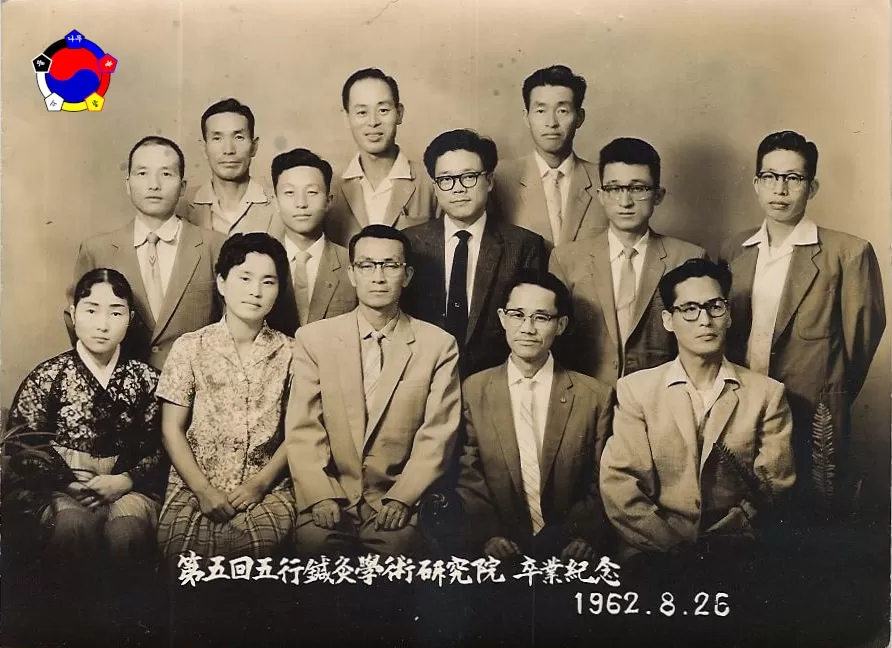
Approximately 400 years ago, Saahm, an ascetic with roots in Korea, made significant contributions by formulating key theories. Regrettably, this knowledge was lost until the early 1950s when the esteemed Great Great Master Rhee rediscovered Saahm’s book. He dedicated himself to studying, treating patients, and passing on this invaluable wisdom to his apprentices.
The mantle of knowledge was then passed to The Great Master Kim, succeeding his father, who not only preserved but further enriched the profound work of his predecessors. Through meticulous study and practical application, The Great Master Kim demonstrated that Saahm’s thesis was not merely an academic concept but an unparalleled healing system of great efficacy.
정통사암오행침구학회: https://ochim.com/
The inherent healing capacity of the human body surpasses societal perceptions.
Attune yourself to the wisdom of your body, as it possesses the innate ability to self-heal.
One’s status as a patient cannot be solely determined by numerical results on a test.
Click to schedule a 30-minute Free Consultation

- https://saahm.net/lectins-gut-health-kosa-acupuncture-tulsa-jenks/
- https://t2m.kr/DbllR