Vitamin D Tablets Are Not Vitamin D: The Truth Your Doctor Never Told You
There is a headline the mainstream health industry will never publish.
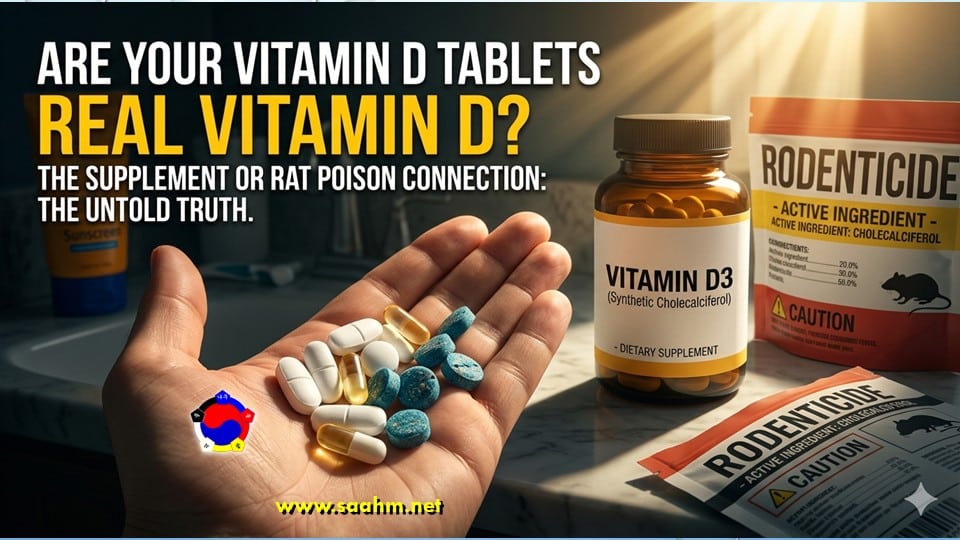
The synthetic compound sold to you as Vitamin D3 — the white tablet or gel capsule sitting in your bathroom cabinet right now — is a chemical called cholecalciferol. It is registered and actively used as rodent poison.
That is not a conspiracy theory. It is a documented, verifiable, regulatory fact. Cholecalciferol is listed as an active rodenticide ingredient by pest control agencies across the world. It is used in commercial rodent poison products precisely because in sufficient doses it causes fatal hypercalcemia — toxic calcium accumulation in the blood, soft tissues, and organs. It calcifies the arteries. It calcifies the kidneys. It calcifies heart tissue.
The standard response is: “But the dose in a supplement is much lower than a lethal rodenticide dose.”
That is true. But it misses the deeper, more important point entirely.
Satisfaction Guaranteed: Heal Beyond Expectations.
Click to schedule a 30-minute Free Consultation
Contents:
- Vitamin D Is Not Actually a Vitamin
- Why Swallowing a Tablet Is Not the Same as Sunlight
- The Blood Test That Is Misleading You
- The Side Effects Nobody Mentions
- The Architecture of the Problem
- The Real Root Cause: Your Liver and Kidneys
- Food Sources, Sunlight, and the Practical Truth About Getting Real Vitamin D
- How Much Sun Do You Actually Need?
- A Real Patient Story: Plantar Fasciitis and the Vitamin D Cycle
- Food Sources, Sunlight, and the Practical Truth About Getting Real Vitamin D
- How Much Sun Do You Actually Need?
- The Magnesium Connection Nobody Is Telling You About
- Where To Get Magnesium Threonate
- What KOSA Acupuncture Does Differently
- Video
- Important Notes
- A Brief History of KOSA Acupuncture
Vitamin D Is Not Actually a Vitamin
The deception begins in the name itself.
Vitamin D is a secosteroid hormone. It is not a vitamin you can consume from food or a tablet the same way you consume vitamin C. It is produced inside your body through a complex, multi-stage photosynthetic process that begins when ultraviolet B radiation from the sun contacts cholesterol in your skin.
Here is how the real process works:
- Skin: UVB sunlight converts cholesterol in your skin into cholecalciferol — the same compound in the tablet, but produced naturally as a precursor
- Liver: That precursor travels to the liver and is converted into 25-hydroxyvitamin D
- Kidneys: It then travels to the kidneys and is converted into the fully active hormone — 1,25-dihydroxyvitamin D, also called calcitriol
Calcitriol is what your body actually uses. It regulates over 2,000 genes. It governs:
- Calcium and phosphorus metabolism
- Immune function
- Cell differentiation
- Cardiovascular health
- Neurological function
- Mood regulation
It interacts with vitamin D receptors found in virtually every tissue and organ in the human body.
You cannot replicate this process in a tablet.
Why Swallowing a Tablet Is Not the Same as Sunlight
When you swallow a synthetic cholecalciferol tablet, your body receives an isolated precursor compound — without the intelligent, self-regulating system that natural sun exposure provides.
Here is what is missing:
- Your skin stops producing cholecalciferol once you have had enough sun. The feedback loop is built in. A tablet has no such mechanism. It bypasses regulatory intelligence entirely.
- Sun-derived vitamin D is sulphated — it is bound to sulphate molecules that make it water-soluble and allow it to circulate freely in the bloodstream. Synthetic oral cholecalciferol is not sulphated. It is fat-soluble, accumulates in fatty tissues, and cannot perform the same biological functions regardless of what your blood test says.
- Critical co-factors are often absent. Your body needs magnesium, vitamin K2, boron, and retinol to properly convert and use vitamin D. The tablet delivers none of them.
Just twenty minutes of direct midday sun on a significant area of skin can produce the equivalent of 10,000 to 20,000 IU of vitamin D precursor — through the natural, sulphated pathway. No tablet comes close. No tablet is designed to.
The Blood Test That Is Misleading You
When your doctor tests your vitamin D levels, they are measuring 25-hydroxyvitamin D in your blood. Swallowing a synthetic tablet will raise that number. Your doctor tells you your levels have improved.
But that number does not tell you:
- Whether your body is actually converting that compound into active calcitriol
- Whether the sulphated form is present
- Whether the co-factors required for conversion are available
You can have a perfect blood test number and still be functionally deficient in every way that matters biologically.
The entire supplementation model is built on a measurement that tells an incomplete story and a product that cannot deliver what it promises.
The Side Effects Nobody Mentions
According to the Mayo Clinic, known side effects of cholecalciferol include:
- Cough
- Difficulty swallowing
- Dizziness
- Fast heartbeat
- Hives or itching
- Puffiness or swelling of the eyelids, face, lips, or tongue
- Skin rash
- Tightness in the chest
- Unusual tiredness or weakness
These are the documented reactions to the same compound being sold as a routine daily health supplement to millions of people worldwide.
The Architecture of the Problem
Consider this carefully:
- You are told the sun is dangerous
- You are told to cover up and use chemical sunscreen — which blocks UVB (Ultraviolet B, the frequency needed for vitamin D synthesis) while allowing UVA through
- You are told you are deficient — which you genuinely are, because you have been kept from your only real source
- And then you are sold a synthetic rodent poison compound as the solution to the deficiency that was created by keeping you from the sun
The sun is free. It always has been. It requires no prescription, no manufacturing process, no supply chain, and no profit margin. It produces not only the active hormonal form of vitamin D, but simultaneously produces:
- Nitric oxide — which lowers blood pressure
- Melatonin precursors in the skin
- Endorphins
- A cascade of photobiological effects that no supplement can approximate
The global vitamin D supplement market is worth billions of dollars annually. Think about who benefits from keeping you out of the sun.
The Real Root Cause: Your Liver and Kidneys
At KOSA Acupuncture, we go further than simply pointing out what is wrong with synthetic supplements. We address why deficiency happens in the first place.
The most commonly overlooked truth about vitamin D deficiency is this:
If your liver and kidneys are not healthy, your body cannot complete the conversion process — regardless of how much sun you get or how many tablets you take.
The symptoms most people attribute to vitamin D deficiency — fatigue, depression, frequent illness, bone pain, slow wound healing — are often better understood as signals of unhealthy liver and kidney function.
Additionally, cholesterol is the raw material your body uses to begin vitamin D synthesis. If you are taking statin drugs that artificially suppress cholesterol, you are cutting off the very building blocks your body needs. This is a connection conventional medicine rarely discusses openly.
Excessive vitamin D supplementation can actually overwhelm the liver and kidneys, disrupting the delicate balance required for natural hormone production and potentially shutting down the body’s own manufacturing process.
Food Sources, Sunlight, and the Practical Truth About Getting Real Vitamin D
At this point, a reasonable question arises — what about vitamin D from food? Fatty fish like salmon, mackerel, and sardines, egg yolks, liver, and some UV-exposed mushrooms all contain vitamin D3. When you eat it, D3 is absorbed through the small intestine alongside dietary fat. That means absorption depends heavily on the fat content of your meal and the health of your digestive system. People with conditions like Crohn’s disease, coeliac disease, or those who have had gastric bypass surgery often absorb dietary D3 poorly. Supplemental D3 behaves in essentially the same way as food-sourced D3 — it requires fat for absorption, it bypasses nothing, and it faces the same conversion challenges in the liver and kidneys.
Sunlight-produced D3, by contrast, enters the bloodstream directly through the skin, bypassing the digestive system entirely. It is considered more bioavailable and longer-lasting in the bloodstream. And critically, your body self-regulates it. Excess sun exposure does not cause vitamin D toxicity because the body naturally breaks down surplus precursor before it can accumulate to dangerous levels. No tablet has that intelligence built in.
How Much Sun Do You Actually Need?
For a fair-skinned person in summer, exposing arms and legs — roughly 25 to 30 percent of body surface area — to midday sun for just 10 to 20 minutes produces approximately 10,000 to 20,000 IU of vitamin D3. That is far more than the conservative recommended daily intake of 600 to 800 IU — a figure many researchers now consider significantly too low.
But several variables change everything:
- Time of day: UVB rays are only strong enough between approximately 10 am and 3 pm. Early morning or late afternoon sun produces little to no D3 regardless of how long you stay outside.
- Season: Above approximately 35 degrees latitude — roughly above Los Angeles or Madrid — winter UVB angles are too weak for meaningful D3 production for several months of the year.
- Skin tone: Darker skin contains more melanin, which acts as a natural sunscreen. People with very dark skin may need 30 to 60 minutes or more to produce the same amount as someone with fair skin in 10 minutes.
- Age: Older skin has significantly lower concentrations of 7-dehydrocholesterol. D3 production can be up to 75 percent less efficient at age 70 compared to age 20.
- Sunscreen: SPF 30 reduces D3 production by approximately 95 to 99 percent.
- Glass and clothing: Both block UVB entirely. Sitting next to a sunny window produces no vitamin D3 whatsoever.
A simple practical guideline: aim for midday sun exposure until your skin reaches the lightest possible shade of pink — known as one minimal erythemal dose. That point represents near-maximum D3 production for your skin type without burning. Going beyond it adds sun damage without meaningfully increasing D3 output.
A Real Patient Story: Plantar Fasciitis and the Vitamin D Cycle
One of our female patients came to KOSA Acupuncture suffering from persistent plantar fasciitis. She had been receiving vitamin D supplements and injections for an extended period. Her blood test numbers looked acceptable. But her pain continued.
Through KOSA Acupuncture’s root-cause treatment approach and personalized lifestyle guidance, she not only overcame the plantar fasciitis completely — she also eliminated her need for vitamin D injections altogether.
Her liver and kidneys were supported. Her body began doing what it was always designed to do.
That is what healing beyond expectations looks like in practice.
Food Sources, Sunlight, and the Practical Truth About Getting Real Vitamin D
At this point, a reasonable question arises — what about vitamin D from food? Fatty fish like salmon, mackerel, and sardines, egg yolks, liver, and some UV-exposed mushrooms all contain vitamin D3. When you eat it, D3 is absorbed through the small intestine alongside dietary fat. That means absorption depends heavily on the fat content of your meal and the health of your digestive system. People with conditions like Crohn’s disease, coeliac disease, or those who have had gastric bypass surgery often absorb dietary D3 poorly. Supplemental D3 behaves in essentially the same way as food-sourced D3 — it requires fat for absorption, it bypasses nothing, and it faces the same conversion challenges in the liver and kidneys.
Sunlight-produced D3, by contrast, enters the bloodstream directly through the skin, bypassing the digestive system entirely. It is considered more bioavailable and longer-lasting in the bloodstream. And critically, your body self-regulates it. Excess sun exposure does not cause vitamin D toxicity because the body naturally breaks down surplus precursor before it can accumulate to dangerous levels. No tablet has that intelligence built in.
How Much Sun Do You Actually Need?
For a fair-skinned person in summer, exposing arms and legs — roughly 25 to 30 percent of body surface area — to midday sun for just 10 to 20 minutes produces approximately 10,000 to 20,000 IU of vitamin D3. That is far more than the conservative recommended daily intake of 600 to 800 IU — a figure many researchers now consider significantly too low.
But several variables change everything:
- Time of day: UVB rays are only strong enough between approximately 10 am and 3 pm. Early morning or late afternoon sun produces little to no D3 regardless of how long you stay outside.
- Season: Above approximately 35 degrees latitude — roughly above Los Angeles or Madrid — winter UVB angles are too weak for meaningful D3 production for several months of the year.
- Skin tone: Darker skin contains more melanin, which acts as a natural sunscreen. People with very dark skin may need 30 to 60 minutes or more to produce the same amount as someone with fair skin in 10 minutes.
- Age: Older skin has significantly lower concentrations of 7-dehydrocholesterol. D3 production can be up to 75 percent less efficient at age 70 compared to age 20.
- Sunscreen: SPF 30 reduces D3 production by approximately 95 to 99 percent.
- Glass and clothing: Both block UVB entirely. Sitting next to a sunny window produces no vitamin D3 whatsoever.
A simple practical guideline: aim for midday sun exposure until your skin reaches the lightest possible shade of pink — known as one minimal erythemal dose. That point represents near-maximum D3 production for your skin type without burning. Going beyond it adds sun damage without meaningfully increasing D3 output.
The Magnesium Connection Nobody Is Telling You About
There is one final piece of this picture that almost nobody in conventional medicine discusses — and it may be the most practically important of all.
Magnesium is required to activate vitamin D3.
Both enzymatic conversion steps — the liver converting D3 into calcidiol, and the kidneys converting calcidiol into calcitriol — require magnesium as a cofactor. Without sufficient magnesium, vitamin D3 stays in its inactive storage form and cannot perform its functions, regardless of how much you take, how much sun you get, or how good your blood test numbers look.
It gets more complex. Taking high-dose D3 supplements actually increases your body’s demand for magnesium — because more conversion activity requires more of it. Many people who supplement with D3 and experience side effects like muscle cramps, headaches, fatigue, or poor sleep are often experiencing magnesium depletion — not a vitamin D problem at all. And blood tests measuring calcidiol can appear low, not because you lack D3, but because magnesium deficiency is blocking the entire conversion pathway.
Not all magnesium forms are equal. Here is what matters:
- Magnesium glycinate — the best overall choice. Highly bioavailable, gentle on digestion, and ideal for regular use alongside D3
- Magnesium malate — excellent for daytime use, supports cellular energy production alongside D3 activation
- Magnesium threonate — the only form shown to cross the blood-brain barrier, valuable if neurological symptoms accompany deficiency
Get it here, Magnesium Threonate Gummies. - Avoid magnesium oxide — very poorly absorbed and largely ineffective for D3 support
- Use caution with magnesium citrate — decent absorption, but a strong laxative effect at higher doses makes consistent use difficult
The practical recommendation is straightforward: take magnesium glycinate alongside any D3 and K2 supplementation, with a fat-containing meal. This timing maximizes D3 absorption while simultaneously providing the magnesium the body needs to activate it.
This is exactly the kind of interconnected, root-cause understanding that KOSA Acupuncture is built on. It is never one thing in isolation. It is always the whole system — and restoring the whole system is the only path to healing that lasts.
Where To Get Magnesium Threonate Gummies
Magnesium Threonate Gummies – https://saahm.net/curated-health-essentials/3/#MagnesiumThreonateGummies
What KOSA Acupuncture Does Differently
At KOSA Acupuncture in Tulsa and Jenks, Oklahoma, we are built on a different foundation from the mainstream — and from most of traditional Chinese medicine, which tends to remain symptom-focused and keeps patients returning indefinitely.
KOSA Acupuncture | Best of The Best is the only medicine that:
- Treats the root problems — not surface symptoms
- Provides the health truths patients are rarely told
- Empowers your body’s natural self-healing abilities
- Addresses physical, emotional, mental, and intellectual issues simultaneously
- Aims for quick recovery and proudly “loses” patients when they no longer need care
Our near-100% success rate is not built on dependency. It is built on results so complete that patients move on with their lives — free from ongoing treatments, medications, and interventions.
We offer:
- Free consultations for skeptical or first-time visitors
- Child-friendly options for families
- A commitment to sharing health truths the mainstream ignores
Our tagline is our promise:
‘’’’’ Satisfaction Guaranteed: Heal Beyond Expectations.’’’’’
Do not follow the herd blindly. Health is not a popularity contest. It requires investigation, critical thinking, and a willingness to question what you have been told.
Your skepticism is not a weakness. It is the beginning of your healing.
Visit us at https://saahm.net/ — because you truly have nothing to lose but pain and medicines.
Video
🎥 Watch on Rumble: https://rumble.com/v7bnbyc-vitamin-d-tablets-are-not-vitamin-d-the-truth-about-cholecalciferol-sun-exp.html?mref=i8tar&mc=dzsl7
🎥 Watch on YouTube: https://youtu.be/5dCZOYTGj4Y

Important Notes
Click to schedule a 30-minute Free Consultation
The body’s inherent self-healing capability is a potent force, often underestimated and underappreciated.
At KOSA Acupuncture, we guide patients in identifying and eliminating root causes through tailored suggestions, empowering them to make necessary lifestyle changes for an accelerated healing process.
Our role involves not only providing accurate information but also treating all relevant organs comprehensively, addressing multiple conditions simultaneously.
For a deeper understanding, explore our comprehensive guide on “Everything About Food And Health“.
It’s noteworthy that progress and improvements may vary across different conditions.
At KOSA Acupuncture, our unwavering objective is to expedite the healing process, aiming for patients to regain optimal health promptly. This success is evidenced by a high rate of patients achieving a state where reliance on drugs, medications, and regular medical consultations becomes unnecessary.
Choosing KOSA Acupuncture entails shedding pain, discomfort, reliance on drugs, and excess weight. Our commitment is to guide patients toward a healthier, drug-free lifestyle with nothing to lose but these burdens.
A Brief History of KOSA Acupuncture
Click to schedule a 30-minute Free Consultation
While acupuncture boasts a rich history spanning thousands of years, the full utilization of its underlying theory, encompassing Yin, Yang, and the Five Elements, remained elusive for much of that time.
Approximately 400 years ago, Saahm, an ascetic with roots in Korea, made significant contributions by formulating key theories. Regrettably, this knowledge was lost until the early 1950s when the esteemed Great Great Master Rhee rediscovered Saahm’s book. He dedicated himself to studying, treating patients, and passing on this invaluable wisdom to his apprentices.
The mantle of knowledge was then passed to The Great Master Kim, succeeding his father, who not only preserved but further enriched the profound work of his predecessors. Through meticulous study and practical application, The Great Master Kim demonstrated that Saahm’s thesis was not merely an academic concept but an unparalleled healing system of great efficacy.
정통사암오행침구학회: https://ochim.com/
The inherent healing capacity of the human body surpasses societal perceptions.
Attune yourself to the wisdom of your body, as it possesses the innate ability to self-heal.
One’s status as a patient cannot be solely determined by numerical results on a test.
Click to schedule a 30-minute Free Consultation
- https://saahm.net/vitamin-d-tablets-not-real-vitamin-d-truth/
- https://t2m.kr/DbllR